Philosophy for Children
Philosophy for Children focuses on the children becoming creative, caring, critical and collaborative learners. The 4 C’s are transferable skills that can be used across all areas of the curriculum. What makes P4C lessons different from others is that the teacher facilitates the learning, but the enquiry is driven by the students themselves. Students have the opportunity to express their opinion about many concepts or ‘big ideas’ in a safe environment where every opinion is valid and where an exciting start of discussion and further enquiry begins.
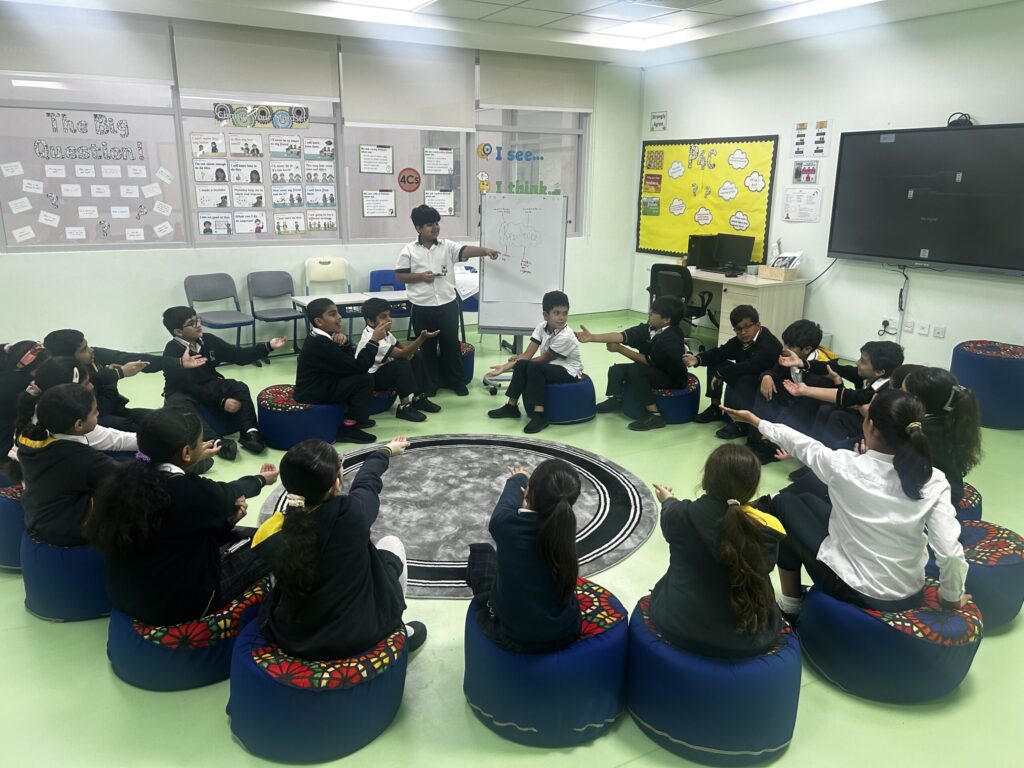
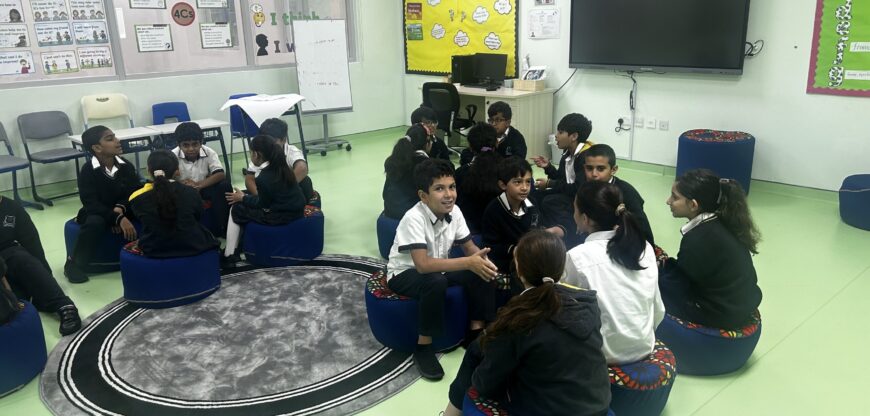
In Newton Smash, we are fortunate enough to have a dedicated P4C room that is fully equipped with all the necessary resources for successful P4C enquiries. The children sit in a circle, not directed at the teacher as they would in most lessons, but at each other to facilitate for student-based learning. Each lesson focuses on a main concept, or ‘big idea’ identified by the children from a given stimulus. In small groups, the children then have the opportunity to create thought provoking questions that will be shared with the class and answered in their P4C floor-book. Philosophy for Children focuses on the children becoming creative, caring, critical and collaborative learners. The 4 C’s are transferable skills that can be used across all areas of the curriculum. What makes P4C lessons different from others is that the teacher facilitates the learning, but the enquiry is driven by the students themselves. Students have the opportunity to express their opinion about many concepts or ‘big ideas’ in a safe environment where every opinion is valid and where an exciting start of discussion and further enquiry begins.
In Newton Smash, we are fortunate enough to have a dedicated P4C room that is fully equipped with all the necessary resources for successful P4C enquiries. The children sit in a circle, not directed at the teacher as they would in most lessons, but at each other to facilitate for student-based learning. Each lesson focuses on a main concept, or ‘big idea’ identified by the children from a given stimulus. In small groups, the children then have the opportunity to create thought provoking questions that will be shared with the class and answered in their P4C floor-book.