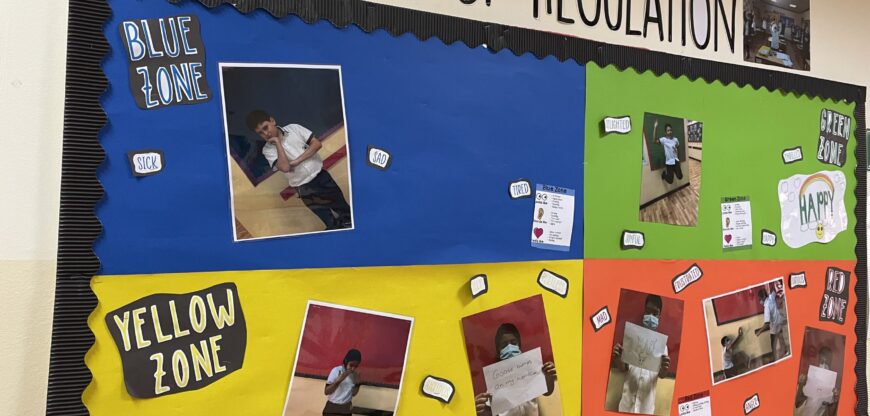
Zones of Regulation
At Newton D Ring, we prioritize the emotional well-being and self-regulation of our students to ensure they are ready to learn and thrive. One of our key approaches is the Zones of Regulation, a framework designed to teach students how to identify, understand, and manage their emotions effectively.
What Are the Zones of Regulation?
The Zones of Regulation categorize emotions and states of alertness into four distinct zones:
● Blue Zone: Low energy states such as sadness, tiredness, or boredom.
● Green Zone: A calm and focused state, ideal for learning and social interactions.
● Yellow Zone: Higher energy states like frustration, anxiety, or excitement, which require increased self-regulation.
● Red Zone: Intense emotions such as anger or extreme stress, where calming strategies are essential.
Through this program, students learn to recognize which zone they are in, what triggers their emotions, and how to use strategies to return to a balanced state.
Implementation at Newton D Ring
We integrate the Zones of Regulation into daily school life through:
● Explicit Weekly Lessons: Focused teaching sessions to help students understand the zones and develop self-regulation skills.
● Visual Displays: Posters and tools around the school to serve as reminders and guides for students.
● Regulation Stations: Designated areas equipped with sensory tools and calming activities to support students in managing their emotions.
● Parent Workshops: Engaging sessions to help families understand the Zones framework and support emotional regulation at home.
Teacher Training and Support
Our staff receive in-depth training on the Zones of Regulation, enabling them to seamlessly incorporate the framework into their teaching and interactions with students. By modeling and encouraging self-regulation strategies, teachers help students build lifelong skills in emotional awareness and control. By embedding the Zones of Regulation into our school culture, we empower students to take ownership of their emotions, build resilience, and maintain positive relationships. This approach aligns with our commitment to creating a supportive, inclusive, and nurturing learning environment for all.